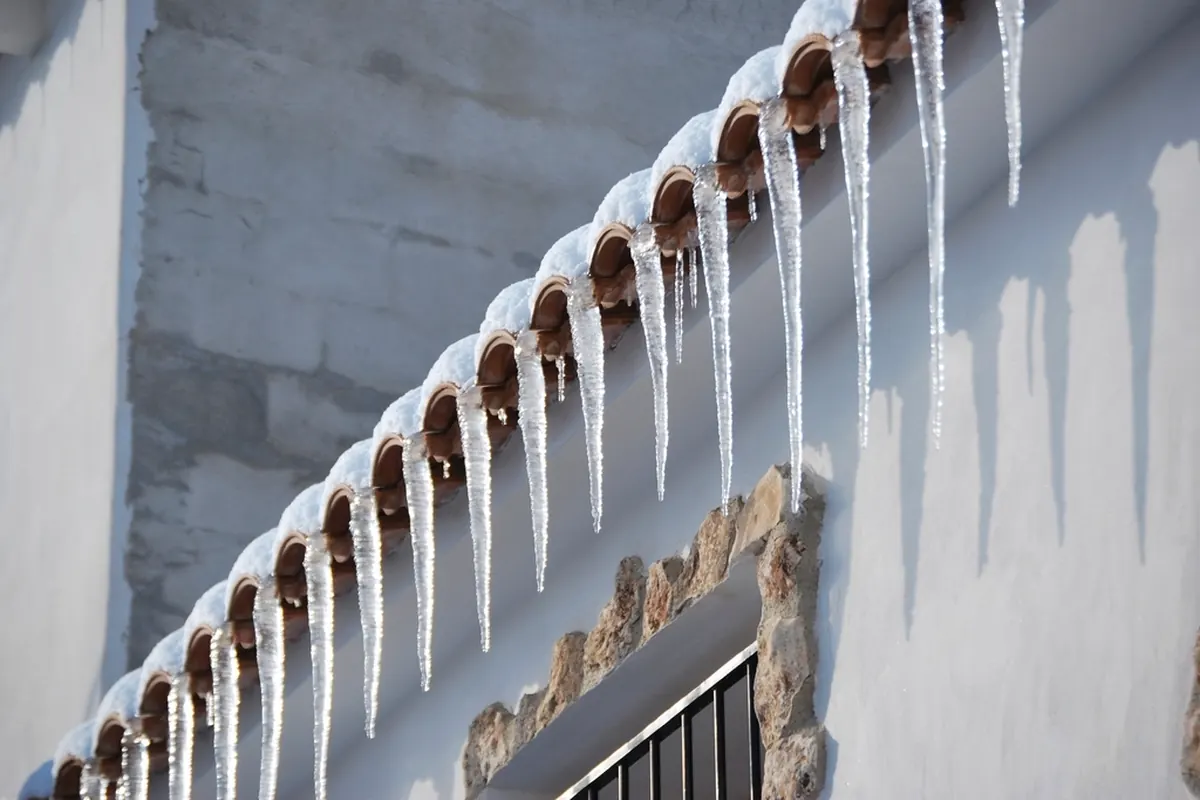
Western Washington isn’t built for long freezes. When an arctic blast arrives, as it did in December 2008, February 2019 and January 2024, pipes in crawl spaces, garages and exterior walls split. East of the mountains, Spokane and Wenatchee winters bring snow, ice dams and cold snaps every year.
Frozen pipes
Most homeowner policies cover sudden water damage from a pipe that freezes and bursts. The pipe itself may not be covered, but tearing out walls or floors to reach it and repairing the water damage usually is.
Policies commonly include a condition: if the home is vacant, unoccupied or under construction, you must use reasonable care to maintain heat or shut off and drain the water. Second homes and cabins are where this condition comes up most.
Ice dams
An ice dam forms when heat from the house melts snow on the roof and the water refreezes at the cold eaves. Water backs up under the shingles and leaks into walls and ceilings. Many policies cover the resulting water damage. Insurers sometimes argue poor insulation or ventilation caused it, raising maintenance questions.
Snow load and collapse
Heavy snow can collapse carports, patio covers, barns and older roofs. Policies define collapse narrowly, and some limit coverage for certain structures. Read the collapse section carefully.
Documenting winter damage
- Photograph ice dams, icicles and snow depth on the roof before it melts.
- Photograph the burst pipe and keep the failed section.
- Record indoor temperatures and thermostat settings if you can.
- Keep plumber, mitigation and utility records.
Once coverage is accepted, the remaining question is the amount of loss. That’s where an estimate review or appraisal can help.
Keep reading
 Guide
How to Read Your Insurer’s Estimate Line by Line
Line items, quantities, depreciation and O&P, and where the gaps usually hide.Read Guide
The Appraisal Clause in Washington Policies: A Plain-English Guide
What the clause says, how a demand works and the limits of what a panel can decide.Read Guide